


Stolen Focus by Johann Hari
A Mindful Miscellany, #36

Mindful: Attentive, Aware, Conscious, Thoughtful, Alert.
Miscellany: A collection of various items, parts, or ingredients, especially one composed of diverse literary works.
Welcome to A Mindful Miscellany, a newsletter dedicated to Good Humaning in the Turbulent Twenties. My name is Adam Karaoguz (car-owz). I am a 27 year prior-enlisted US Naval Special Warfare officer. I’m also a fiction novelist on submission with D4EO literary. Extended bio located here.
TL/DR: You didn’t lose your attention. It was stolen. Author Johann Hari presents 12 possible causes and several system and individual-level recommendations to foster deep thinking.
If you prefer audio, this is a good podcast where Hari discusses the book with Bari Weiss: (Apple here, Spotify here)
Introduction: Walking in Memphis. Hari takes his nephew to Graceland. Everyone is distracted, on devices, can’t focus or enjoy the real world. Hari decided to seclude himself without connection to the internet and see what happens.
Cause One: Increase in Speed, Switching, and Filtering.
Johann goes off line, rents a place in Provincetown, MA for three months with an internet-less laptop and a jitterbug phone. After a few weeks, discovers he can read books for hours at a time, eats healthy, gets exercise, and write a 90,000 word novel.
The average human uses their phone three hours and fifteen minutes a day, and touches their phone 2,617 times a day.
Information overload. In 1986, the average human was exposed to 40 newspapers worth of content per day. In 2007, it was 147. (Connects to Herbert Simon— “In a wealth of information, there is a poverty of attention.”)
Lots of width today, but lack of depth/nuance within topics (See The Shallows and Deep Work for more on these)
Cause Two: The Crippling of Our Flow States.
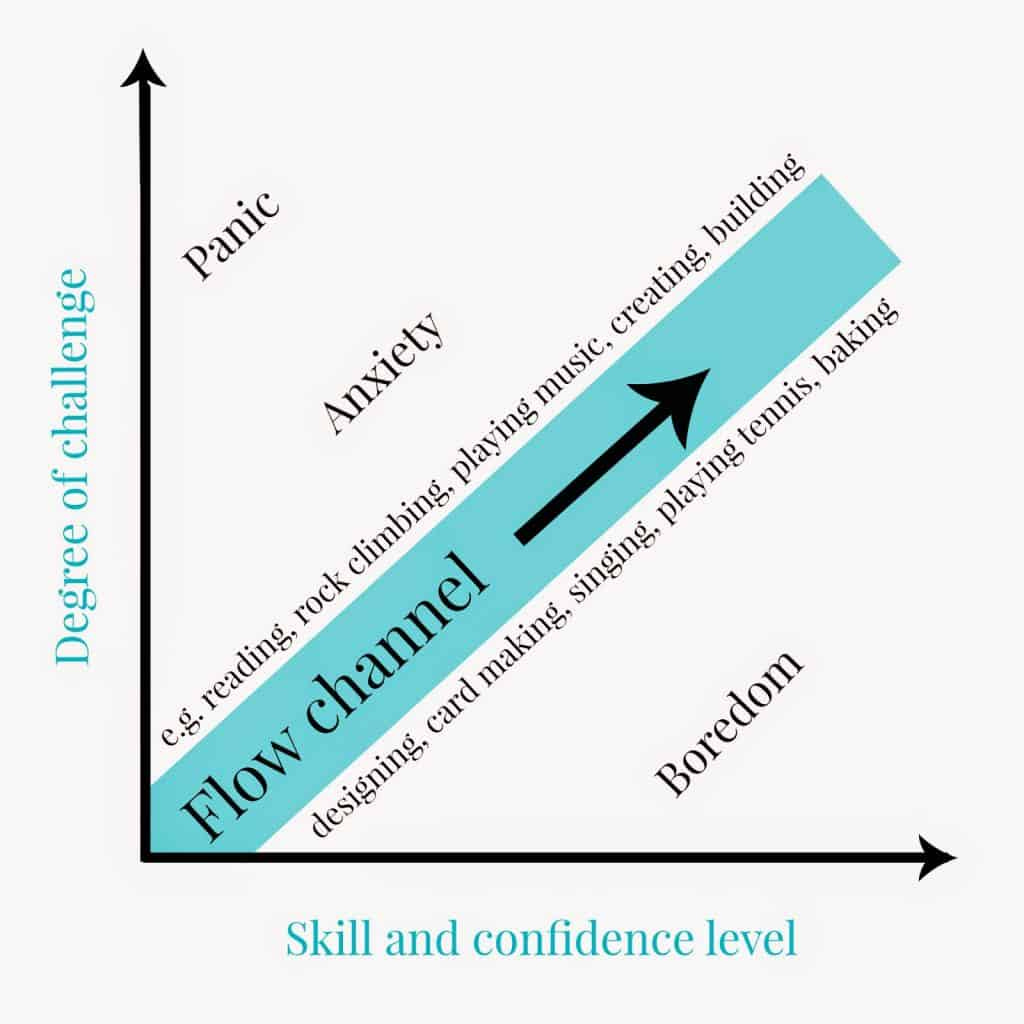
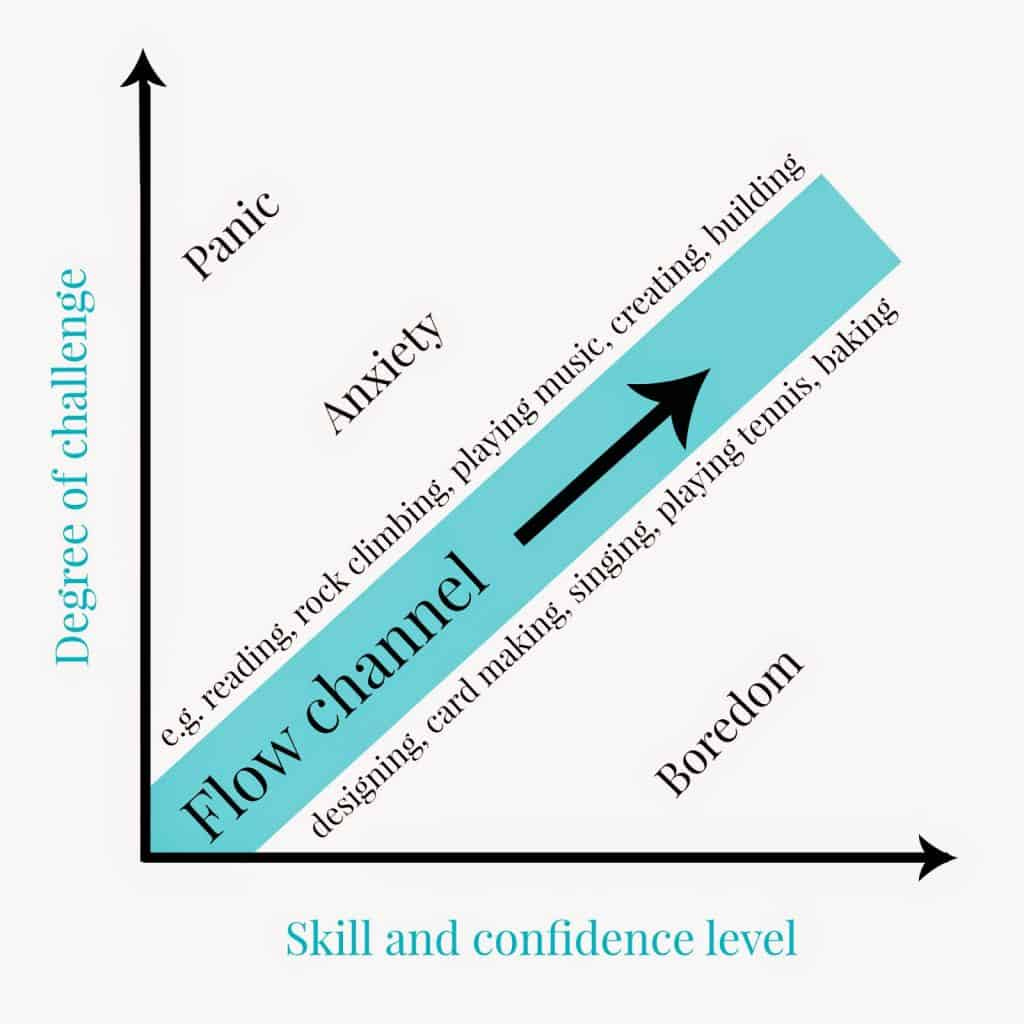
Fragmentation vs. Flow. The way our environments are set up today facilitate the fragmentation of our attention, rather than reaching for flow states.
Definition of Flow: also known colloquially as being in the zone, is the mental state in which a person performing some activity is fully immersed in a feeling of energized focus, full involvement, and enjoyment in the process of the activity. In essence, flow is characterized by the complete absorption in what one does, and a resulting transformation in one's sense of time. Flow is the melting together of action and consciousness; the state of finding a balance between a skill and how challenging that task is. It requires a high level of concentration. Flow is used as a coping skill for stress and anxiety when productively pursuing a form of leisure that matches one's skill set.
See the body of work of Mihaly Csikszentmihaly for more on this (And Cliff Kimber with his forthcoming book, Born to Flow).
Flow baby, Flow
Cause Three: The Rise of Physical and Mental Exhaustion.
Sleep- we need more of it! Loss of 42 minutes in recent decades (children loss of average of 85 minutes)
Sleep hygiene— colder rooms, darker rooms, eliminating devices in bedroom, artificial light and damage to the cortisol/melatonin balance.
When sleep deprived, we score that same as if we’re legally intoxicated on various tests.
Causes attentional blinks, we miss things.
Cause Four: The Collapse of Sustained Reading.
Widespread loss of ability to read longer books. Vignette of woman who can only read the first chapters of books.
57% of Americans now do not read a single book in a year (this physically hurts me to type).
In 2017, the average American spends 17 minutes a day reading books and 5.4 hours on their phone.
Screens encourage “skim and scan” rather than deeper engagement with ideas/material.
You remember less reading on screens vs. physical books/papers.
Cause Five: The Disruption of Mind-Wandering.
Taking walks/activity while thinking is great way to make connections.
Attention as a spotlight vs. wandering freely, to make nonlinear connections.
Beware the shadow- excessive rumination/perseverating about a topic.
Cause Six: The Rise of Technology That Can Track and Manipulate You (Part I).
Tristan Harris backstory, Center for Humane Tech (Creator of The Social Dilemma documentary which every old person is legally bound to attempt to get younger people to watch).
Stanford persuasion lab, some of the thought centers behind tech influence.
Snapchat streaks, Infinite Scroll on Social Media (Which, fun fact, was actually created by Aza Raskin, the other mind behind Center for Humane Tech).
Similarities to Stage Magicians— directing audience focus.
Surveillance Capitalism
Cause Six: The Rise of Technology That Can Track and Manipulate You (Part II).
Perverse incentive structure to keep your eyeballs on devices. Two reasons: 1. Time on Site allows you to see advertising. 2. What you say/do can then be sold to marketers to directly target you for sales.
Negative emotions perculate through social ecosystems faster than positive ones.
Fake content travels 6x faster than truthful content.
Harris: “These algorithmns are debasing the soil of society.”
Pro-tech/Anti-tech is the wrong framing— it should be “what tech, for what purposes, in whose interests?”
Cause Seven: The Rise of Cruel Optimism.
Two contrasting arguments. 1. Tristan Harris- We are being boiled alive in systems destroying our attentional faculties. 2. Nir Eyal- With discipline, you can focus yourself and avoid this destruction of attention. We need to hit the challenge from both sides: Become individually more focused and fix the systems fracturing our attention as part of their business model.
Comparison to obesity. Individuals have agency/a role to play, but also immersed in systems stuffing food with salt, sugar, and all the processed junk.
The First Glimpses of the Deeper Solution.
Possible solutions to social media: 1. Subscription model. In this way, we become the customers, rather than the product that social media companies are selling to advertisers. 2. A public utility. A sewer is a public good that all citizens pay for. We could regulate social media the same way.
We can modify the incentive structure for this digital commons, so that flourishing is emphasized, rather than monetization of eyeballs and clicks. But we need government regulation to forcibly change the incentives for private companies to make changes. Example: Lead in paint and gas. It took decades of activism, but citizens forced governments to force corporations to take action through policy/laws.
Cause Eight: The Surge in Stress and How It Is Triggering Vigilance.
Adverse Childhood Experiences (ACE) driving some of human anxiety.
Chronic stress fatigue, financial difficulty.
Universal Basic Income as a possible solution to this instability.
The Places that Figured Out How to Reverse the Surge in Speed and Exhaustion.
Success of Work From Home (WFH) and Four day work weeks in lowering stress, exhaustion, and improving both productivity and flourishing.
Causes Nine and Ten: Our Deteriorating Diets and Rising Pollution.
Processed food as a driver of poor attention. Shopping around the edges of the supermarket as the way to go.
Rising pollution hurting focus, toxins in air and in products.
Cause Eleven: The Rise of ADHD and How We Are Responding to It.
Stats on medicating ADHD, and other possible drivers besides biology, such as nutrition, sleep, and environment.
Cause Twelve: The Confinement of Our Children, Both Physically, and Psychologically.
Kids need unsupervised play and exercise outside to learn proper socialization and interaction with reality. Organizations like letgrow.org are working to encourage this.
Huge driver of anxiety in this generation, cooping kids up at home after school.
Connects to the work of Jonathan Haidt in this space (Coddling of the American Mind, etc).
Conclusion: Three types of light: Spotlight- immediate attention, near term objectives, Starlight- long term wishes/goals (what you want for your life), Daylight- How you know what you want (the starlight), and Hari proposes a fourth: Stadium lights- in this light, we can see each other and help one other toward our goals. There are plenty of examples of the sort of change we need in history— The leaded fuel example, the feminist movement, the fight against Chlorofluorocarbons (CFCs ) in the 80s and 90s.
Six things Hari is doing now to help his focus/attention:
He uses precommitment to stop switching tasks so much (Taking steps beforehand, such as using a phone safe or app that shuts off the internet on your computer).
He changed the way he responds to his own sense of distraction. Instead of getting mad at himself, he asks how he can better get into a flow state.
Based on what he learned about social media, he takes six months a year off it (divided into chunks of a few months)
Goes for a walk every day without his phone for an hour to let his mind wander.
He is strict about getting eight hours of sleep a night.
He’s not a parent, but is involved with his godchildren and young relatives— the importance of relational connection.
Hari’s Three Recommendations For Human Flourishing:
Ban the Surveillance Capitalism business model, because people being hacked and deliberately hooked cannot focus.
Introduce a four day work week to allow family time and adequate rest for humans.
Rebuild childhood around letting children play freely— in neighborhoods and schools (Connects to Bildung model of schooling)
Final insight: Attention has been degrading slowly during the modern era (Hari defines this as basically industrial revolution dates, 1880 or so). Since then, our economies have been built on a growth model (Connects to Nate Hagens’ work on Energy Blindness, and an economy with an embedded growth obligation on a planet with finite resources). Countries and corporations can grow in one of two ways: 1. Find new markets for goods or 2. Get existing customers to buy more/give more attention/consume more. This economic engine requires more and more speed to keep going over time, which is inevitably degrading our attention (Moloch anyone?). We need an Attention Rebellion— a social movement aimed at taking back our attentional commons.
On this pleasant note, have a great week everyone!
Adam, this very good. There is an aspect of this phenomenon related to passivity. When we are actively engaged in doing something, it requires greater attention and focus. I’ve been writing intentionally for almost twenty years beginning with a weblog and a newspaper column in 2004. In 2016, I began work on my first book, Circle of Impact. It took two years to produce a manuscript. Huge learning curve. When the pandemic came, I wrote seven short books between March 2020 and June 2021. My capacity for focused attention was growing because I was working out of a clear sense of active purpose. I wasn’t passively responding. I was actively creating. In 2022, I began writing at Substack. That year I produced over 200,000 words, and found that the writing gave me greater facility for speaking. Then this year, I began The Eddy Network Podcast. What I found equates to what Johann Hari found. As I interviewed people, many of them I am meeting for the first time, I found my ability for focused attention growing as I listened more intentionally. The result was hearing things my guests were saying that prompted questions that took us deeper than a casual conversation. I found the 95 episodes changed me like it was a training regimen. I am calmer, less in a hurry to say something, and get on to the next thing. All this “work” can be found here- YouTube - https://tinyurl.com/42xx39ph - Substack - https://edbrenegar.substack.com. The key is having a sense of purpose that defines our intention for how we order our time. It means that we have to see ourselves as creators, not passive receptors of other people’s creativity. It was this awareness almost 15 years ago that was the change that brought me to this moment. Now, the question is “Where do I take all this in 2024?” The learning and capacity building never ends.
The writing life demands adherrence to focus and discipline. The more focused you can become, the deeper you can go into a topic. There may be a limit. Is there such a thing as too much patience ? I like 100 year old books because of their beauty and elegance. Design and formatting do play a part. People can still have long conversations if they desire to have them, but the molecular layer of dust that is our info age will not diminish but only get deeper.